Electric cars are no longer a curiosity on Moldova's roads. Back in 2020, spotting a Nissan Leaf in Chișinău was an event; today they sit in every second shopping centre car park. But switching from petrol to a plug isn't only about saving money — it's a change of habits.
This guide is for anyone considering their first electric car and wanting the real picture: how far it actually goes in winter, where to charge, and what ownership really costs.
Real-world range: forget the manufacturer's figures
The first disappointment for new owners is the gap between the advertised range and what the car actually delivers. Manufacturers quote WLTP figures measured in laboratory conditions at 23 °C.
In Moldova, the reality looks like this:
- Summer, city (25 °C): 90–100% of the claimed range
- Summer, motorway at 110 km/h: 70–80% — speed drains the battery fastest
- Winter, city (−5 °C): 60–70% — cabin heating consumes energy
- Winter, motorway (−10 °C): 50–60% — the worst-case scenario
A practical example: a 40 kWh Nissan Leaf rated at 270 km will realistically manage 140–160 km on a winter motorway run. You'll make it from Chișinău to Bălți (140 km), but you won't get back without charging.
The rule for a first EV: halve the claimed range and ask whether that still works for you. If it does, buy with confidence.
Charging infrastructure in Moldova
Things are improving, but journeys still need planning.
Home charging is the foundation
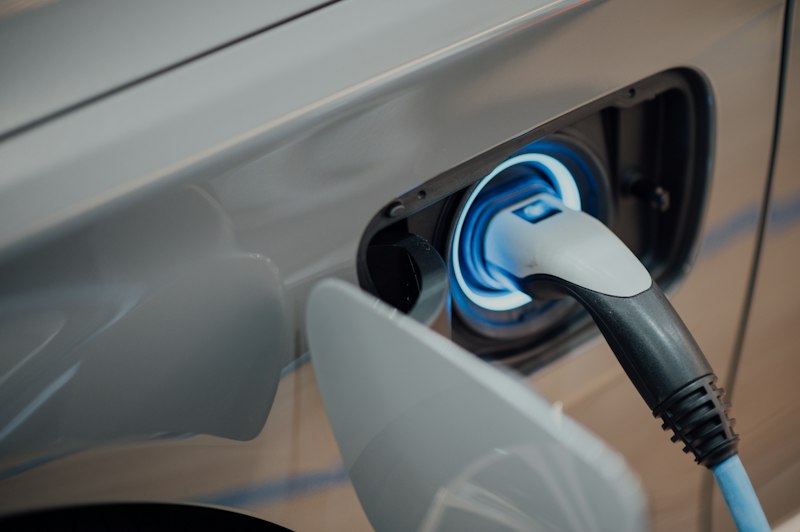
Around 80% of EV owners charge at home, overnight. A standard 220 V socket delivers roughly 2.3 kW, meaning a full charge takes 15–20 hours. A 7.4 kW wallbox cuts that to 5–6 hours and costs €800–1,500 installed.
The key question for apartment dwellers: do you have a parking space where electricity can be run? If not, EV ownership becomes considerably harder.
Public charging
In Chișinău, the network covers major shopping centres and fuel stations. Between towns it thins out: the Chișinău–Bălți route has few chargers, and secondary roads may have none at all.
Before buying, download PlugShare or Chargemap and check whether chargers exist along your usual routes. Ten minutes of research saves a lot of frustration.
What it costs to import an EV from the EU
Most electric cars in Moldova are imported, typically from Germany, the Netherlands or France. The cost breakdown looks like this:
- Purchase price in the EU: from €8,000 for a used Leaf to €25,000+ for a Tesla Model 3
- Transport: €600–1,200 depending on the country
- Customs clearance: EVs are exempt from excise duty, but VAT and customs fees still apply
- Registration: roughly 1,500–2,500 MDL
The excise exemption is the main financial advantage of importing an EV. On a comparable petrol car, excise duty can run to several thousand euros.
Battery health: the most important check
The battery accounts for 40–50% of an EV's value. Replacing it on a used car can cost more than the car itself, which makes checking its State of Health (SOH) essential.
What counts as normal:
- SOH above 90%: excellent, almost as new
- SOH 80–90%: normal degradation for a 3–5 year-old car
- SOH 70–80%: noticeable range loss — negotiate on price
- SOH below 70%: high risk, replacement is approaching
SOH can be checked with a diagnostic scanner using apps such as LeafSpy (for Nissan) or Car Scanner. Specialist garages in Chișinău charge 300–600 MDL for this — don't skip it.
Most manufacturers cover the battery for 8 years or 160,000 km. Check whether that warranty transfers when the car is imported into Moldova — it often applies only in the country of first sale.
Running costs: where you genuinely save
Electricity versus petrol
An EV typically uses 15–18 kWh per 100 km. On an overnight home tariff, that's roughly 40–60 MDL per 100 km. A comparable petrol car burns 7–8 litres, or 180–200 MDL.
That's a three- to four-fold saving. Over 15,000 km a year, it adds up to around 20,000 MDL.
Servicing
An EV has no oil, spark plugs, timing belt, clutch or exhaust system. Routine servicing amounts to checking brakes, cabin filter and battery coolant. Real saving: 3,000–5,000 MDL a year.
What changed in 2026
From 1 January 2026, electric cars pay road tax calculated by vehicle weight. For a typical 1.6–1.8 tonne EV, that's 1,500–2,000 MDL annually. The advantage remains, but it has narrowed.
Which EV to choose first
For a first electric car, reliability and ease of servicing matter more than maximum range.
- Under €12,000: Nissan Leaf 30–40 kWh, Renault Zoe — simple, common, easy to service
- €12,000–20,000: Hyundai Kona Electric, Kia e-Niro — genuine 300+ km range even in winter
- Above €20,000: Tesla Model 3, Volkswagen ID.4 — comfort and range without compromise
One caveat on the first-generation Nissan Leaf: its air-cooled battery degrades faster. Models from 2018 onwards are noticeably more robust.
Who an EV suits — and who it doesn't
It works if: you can charge at home or at work, your daily driving stays under 100 km, and long trips happen a few times a year.
It doesn't if: you live in an apartment block without your own parking space, you regularly travel through areas with no charging infrastructure, or you routinely cover 300+ km in a day.
The bottom line
An electric car in Moldova is no longer an experiment — it's a workable option for urban use. The savings on fuel and servicing are real, and the excise exemption makes importing one genuinely attractive.
But the decision doesn't hinge on the car's specifications. It hinges on your situation: where you can charge, and whether your routes match the charging network. Answer those two questions honestly and the choice becomes obvious.